
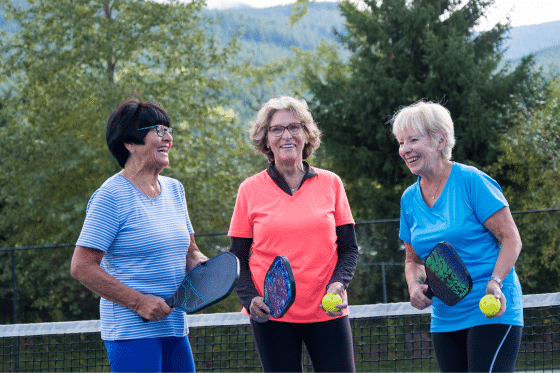
Pickleball has rapidly gained popularity among people over 40, offering a fun and engaging way to stay active and social. However, as with any sport, pickleball injuries can occur, potentially sidelining players from the game they love.
For those eager to remain on the court and play pickleball for years to come, understanding effective injury prevention strategies is crucial. In this post, we delve into essential tips and techniques that can help older players maintain their performance and avoid common pitfalls.
Whether you’re a seasoned player or new to the game, these insights will ensure that your pickleball journey is both enjoyable and injury-free.
If you’re experiencing pain or discomfort while playing, consider scheduling a free discovery visit to address your concerns.
Essential Warm-Up Techniques for Pickleball
Before stepping onto the pickleball court, it’s crucial to prepare your body for the dynamic movements and quick reactions the game demands. A proper warm-up routine can significantly reduce the risk of injuries and enhance your performance. Let’s explore some key warm-up techniques that are particularly beneficial for players over 40.
Dynamic Stretching for Flexibility
Dynamic stretching is a game-changer for pickleball players looking to stay injury-free. Unlike static stretches, dynamic movements warm up your muscles while improving flexibility and range of motion.
Start with gentle arm circles to loosen your shoulders. Next, perform walking lunges to engage your leg muscles. Don’t forget lateral shuffles to mimic the side-to-side movements common in pickleball.
Remember, the goal is to gradually increase your heart rate and prepare your body for action. If you’re unsure about the right stretches for you, consider requesting a call back from a professional who can guide you through a personalized warm-up routine.
Consistency is key. Make dynamic stretching a non-negotiable part of your pre-game ritual, and you’ll likely notice improved flexibility and reduced muscle stiffness over time.
Importance of Joint Mobility
Joint mobility exercises are crucial for pickleball players, especially those over 40. These movements help lubricate your joints, reducing the risk of stiffness and pain during play.
Focus on key areas like your wrists, elbows, shoulders, hips, and ankles. Gentle rotations and controlled movements through your full range of motion can work wonders. For instance, wrist circles can help prevent common pickleball injuries like tennis elbow.
Don’t rush through these exercises. Take your time and listen to your body. If you experience any unusual pain or discomfort, it’s wise to consult with a physical therapist who specializes in sports injuries.
Remember, improved joint mobility not only helps prevent injuries but can also enhance your overall performance on the court. You’ll likely find yourself moving more freely and reacting more quickly to those tricky shots.
Strengthening Exercises for Longevity in Pickleball
To stay on the pickleball court for years to come, it’s essential to build and maintain strength in key areas of your body. A well-rounded strengthening routine can help prevent injuries, improve your game, and ensure you’re able to enjoy pickleball well into your golden years.
Core Stability Workouts
A strong core is the foundation of good pickleball play. It helps with balance, power generation, and injury prevention. Incorporating core stability workouts into your routine is crucial for longevity in the sport.
Start with basic exercises like planks and bird dogs. These engage multiple core muscles simultaneously and improve overall stability. As you progress, add in more dynamic movements like Russian twists or medicine ball rotations.
Remember, core strength isn’t just about visible abs. It includes your deep abdominal muscles, obliques, and lower back. A comprehensive core routine will address all these areas.
Aim for at least 2-3 core workouts per week. If you’re new to core training or returning after an injury, it’s wise to seek professional guidance to ensure you’re using proper form and targeting the right muscle groups.
Lower Body Strengthening Tips
Strong legs and a stable lower body are crucial for quick movements and injury prevention in pickleball. Focus on exercises that mimic the movements you’ll use on the court.
Squats and lunges should be staples in your routine. They build strength in your quads, hamstrings, and glutes – all essential for pickleball performance. Add in some calf raises to improve your ability to quickly change direction.
Don’t forget about balance exercises. Single-leg stands or exercises on an unstable surface can significantly improve your stability on the court.
Start with bodyweight exercises and gradually add resistance as you build strength. Remember, consistency is key. Even short, regular strength sessions can make a big difference in your game and injury resistance over time.
Smart Pickleball Playing Strategies
While physical preparation is crucial, how you play the game can also significantly impact your risk of injury and your longevity in the sport. Let’s explore some smart strategies to keep you on the pickleball court for years to come.
Avoid Common Pickleball Injuries
Understanding and avoiding common pickleball injuries is key to staying in the game. Many injuries in pickleball are due to overuse or sudden, explosive movements.
Tennis elbow is a frequent complaint among players. To prevent this, focus on proper technique when hitting the ball, especially during serves and overhead shots. Strengthening exercises for your forearms can also help.
Knee injuries are another concern. Always bend your knees when playing to absorb shock, and avoid sudden stops or changes in direction when possible. If you’re experiencing knee pain, don’t push through it – seek professional advice.
Remember, many injuries develop gradually. Pay attention to any persistent discomfort and address it early before it becomes a more serious problem.
Listen to Your Body Signals
Your body often sends signals when something’s not right. Learning to interpret and respond to these signals is crucial for injury prevention and long-term enjoyment of pickleball.
If you feel sharp pain during play, stop immediately. This could be a sign of acute injury. Persistent aches or stiffness, even if mild, shouldn’t be ignored either. They might indicate an overuse injury in its early stages.
Pay attention to fatigue levels too. Playing when you’re overly tired increases your risk of injury. It’s okay to take breaks or cut a session short if you’re feeling exhausted.
Remember, recovery is as important as play. Ensure you’re getting adequate rest between sessions and listen to your body when it tells you to slow down. Your future self will thank you for this mindful approach to the game.
If you want to stay on the court for years to come, book a free discovery visit today!
Call (561) 562-8561 or click here to schedule your free visit and take the first step toward years of enjoyable, safe pickleball matches.
More Free Resources:
Read our blog – Stay on the Court: How Pickleball Keeps You Active and Enhances Longevity – Delray Care Physical Therapy
See what others are saying – Google Reviews
Learn more about longevity – Life Longevity Delray Beach: Expert Strategies – Life Longevity Expert Delray Beach, Florida, Lou Fratto