
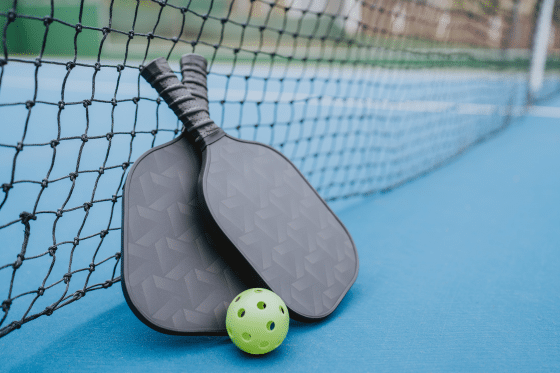
Pickleball has taken off for a reason.
It’s accessible. It’s social. It feels easier to get into than a lot of other sports.
But here’s what happens next.
People start playing more. Games get more competitive. Movements get quicker. And suddenly, the body is being asked to do things it’s not fully prepared for.
That’s where problems start.
Not because pickleball is “dangerous.” But because the body isn’t ready for the demands.
If the goal is to keep playing—and actually enjoy it long-term—then pickleball injury prevention needs to be part of the conversation from the start.
The Real Issue Isn’t Pickleball—It’s Preparation
Most people don’t get into pickleball with a plan.
They just play.
And early on, that works. The intensity feels manageable. The court is smaller. The pace seems controlled.
But over time, things change:
- Movements get faster
- Reactions get sharper
- Games last longer
- Frequency increases
The body goes from occasional activity to repeated stress.
Without preparation, that stress adds up.
That’s the foundation of why pickleball injury prevention matters.
What Pickleball Actually Demands From the Body
Let’s break this down.
Pickleball isn’t just standing and hitting a ball.
It requires:
- Quick lateral movement
- Sudden stops and starts
- Rotational power
- Hand-eye coordination
- Balance under pressure
And it happens repeatedly.
Every point involves some combination of these.
The issue is that most people don’t train these qualities—they just jump into playing.
That gap is where problems show up.
Where Things Typically Go Wrong in Pickleball
There are a few predictable patterns.
1. Movement Without Control
People move quickly—but not efficiently.
They reach instead of positioning. They twist instead of rotating properly. They react late and compensate.
Over time, this creates unnecessary stress.
A big factor in why pickleball injury prevention gets overlooked.
2. Lack of Strength
Strength isn’t just about lifting weights.
It’s about control.
Without enough strength:
- Joints absorb more force
- Movements become less stable
- Fatigue sets in faster
That’s when things start to break down.
3. Poor Warm-Up (or None at All)
Most players walk onto the court and start playing immediately.
No preparation. No gradual build-up.
The body goes from zero to full-speed movement instantly.
That’s not ideal for performance—or longevity.
4. Playing More Than the Body Can Handle
This is a big one.
Pickleball is fun. So people play more.
Back-to-back games. Multiple days in a row. Longer sessions.
But the body needs time to adapt.
Without that, stress accumulates.
And that’s where pickleball injury prevention becomes critical.
The Goal Isn’t to Play Less—It’s to Play Smarter
This isn’t about avoiding pickleball.
It’s about supporting it.
Because the better the body moves, the better the game feels.
And the longer someone can stay on the court.
That’s what pickleball injury prevention is really about.
What Actually Helps in Pickleball
Let’s keep this practical.
No complicated programs. No unnecessary extras.
Just what works.
1. Improve Movement Quality First
Before worrying about speed or power, focus on how movement happens.
That means:
- Positioning instead of reaching
- Controlled steps instead of rushed ones
- Using the hips instead of overloading the lower back
Better movement reduces unnecessary stress.
That’s step one in pickleball injury prevention.
2. Build Strength Where It Matters
You don’t need to train like an athlete.
But you do need a base level of strength.
Focus on:
- Legs (for movement and stability)
- Hips (for power and control)
- Core (for coordination and balance)
Stronger muscles support better movement.
And better movement supports longevity.
3. Don’t Skip the Warm-Up
This is simple—and often ignored.
A basic warm-up should include:
- Light movement
- Gradual increases in intensity
- A few controlled practice swings
It doesn’t need to be long.
It just needs to happen.
A small step that makes a big difference in pickleball injury prevention.
4. Manage Volume
More isn’t always better.
Pay attention to:
- How often you’re playing
- How long sessions last
- How the body feels afterward
If everything is increasing at once, something usually gives.
Balance matters.
5. Add Movement Outside the Court
What happens off the court matters just as much as what happens on it.
Simple additions help:
- Walking regularly
- Basic strength work
- Mobility exercises
These support overall movement capacity.
And that directly impacts pickleball injury prevention.
What Most People Get Wrong in Pickleball
Let’s clear this up.
Mistake 1: Waiting Until Something Feels Off
By the time there’s discomfort or limitation, the issue has already been building.
Prevention starts before that.
Mistake 2: Thinking Playing Is Enough
Playing is specific.
But it doesn’t cover everything the body needs.
Supplemental movement matters.
Mistake 3: Ignoring Fatigue
Fatigue changes movement.
When movement changes, stress increases.
That’s when problems show up.
A Simple Weekly Approach
Keep this realistic.
No overthinking.
2–4 Days of Pickleball
Play as usual—but stay aware of volume.
2–3 Days of Strength or Movement Work
Short sessions. Focus on basics.
Daily Movement
Walk. Stay active. Avoid long periods of inactivity.
That’s enough to support pickleball injury prevention.
What to Expect When You Do This Right
This isn’t about dramatic changes overnight.
It’s about steady improvements.
Over time, people notice:
- Better movement on the court
- Less stiffness after playing
- More consistency between games
- Improved confidence in movement
That’s how pickleball injury prevention shows up in real life.
The Bigger Picture
Pickleball is something people want to keep doing.
Not just for weeks or months—but for years.
That only happens if the body can keep up.
And the body only keeps up if it’s supported.
That’s the whole point of pickleball injury prevention.
Bottom Line
Pickleball itself isn’t the problem.
The lack of preparation is.
If you want to keep playing:
- Move better
- Build basic strength
- Warm up
- Manage how much you play
- Stay consistent
That’s it.
Simple, practical, and effective.
And when those pieces are in place, pickleball becomes something you can keep doing—not something that eventually forces you to stop.